Materials
Cast vs Extruded Acrylic: The Label That Decides Your Engraving
Updated July 7, 2026
Two sheets of acrylic can look identical on the shelf and behave like different materials under the beam: one engraves a beautiful frosty white, the other stays nearly invisible. The difference is one word on the label — cast or extruded — and it's the most consequential material detail in laser acrylic work.
Some links on this page are affiliate links. If you buy through them, The Maker Guide may earn a small commission at no extra cost to you. We only point at product categories we would compare ourselves. Details.
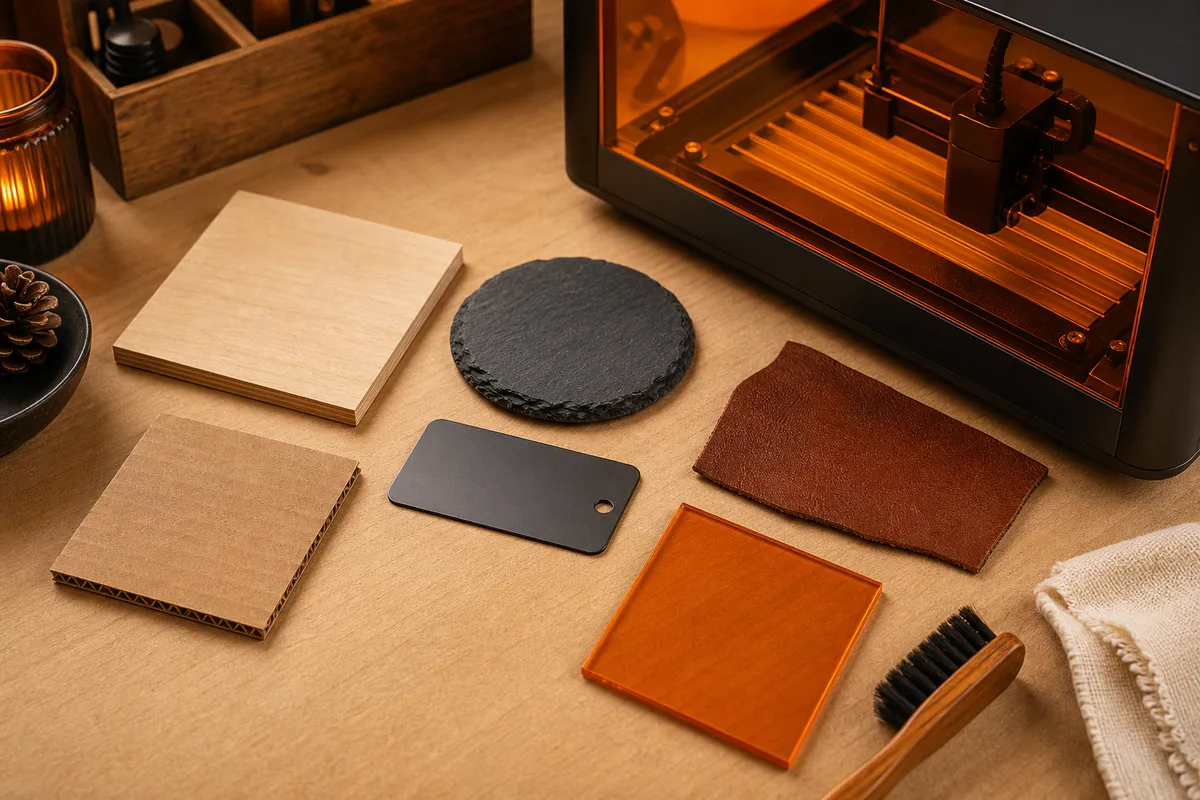
One material, two manufacturing stories
Cast acrylic is poured between glass sheets and cured — low internal stress, slightly variable thickness, harder surface. Extruded acrylic is squeezed through a die — cheap, dimensionally consistent, but full of aligned internal stress. Under a laser, that history replays: cast vaporizes into the matte micro-texture that reads as bright frost; extruded melts more than it vaporizes, leaving engraving that's glossy, faint, and gray-clear.
Neither is 'better.' They're different tools: cast for engraving, extruded for cut-only parts where its cleaner flame-polished edge and lower price win.
The decision table
| Cast (GS) | Extruded (XT) | |
|---|---|---|
| Engraving | Frosty white, high contrast — the whole point | Faint, glossy, disappointing |
| Cut edge | Clean, slightly matte | Glassier straight from the beam |
| Price | 20–40% more | The budget option |
| Thickness tolerance | ±10% wander (poured) | Tight (die-controlled) |
| Cracking/crazing | Resistant | Stress-prone near cuts; solvents craze it |
| Mechanical bending/flame polish | Fine | Fine, but stress + heat can craze later |
| Buy it for | Awards, LED edge-lit signs, engraved gifts | Enclosures, boxes, cut-only shapes |
The diode-laser asterisk
Everything above assumes CO2. On a blue-diode machine there's a prior question: clear acrylic doesn't cut on a diode at all — 450 nm light passes straight through, delivering its energy to whatever's underneath. Dark opaque colors (black is best) absorb and cut fine on 10 W-class diodes at 3 mm; clear, white, and pastels are CO2 territory. Cast-vs-extruded still applies to the colors a diode can touch, and cast black engraves to a handsome gray contrast.
This one physics fact sorts the acrylic project world: earrings and dark ornaments, diode-friendly; clear award plaques and edge-lit LED signs, CO2's home game.
The acrylic shopping list
Cast acrylic sheet pack, 3 mm clear
The engraver's stock: frosty-white marks, clean cuts, and the right base for LED edge-lit projects. Confirm the listing says 'cast' — many just say 'acrylic,' which usually means extruded.
See options on Amazon →Black cast acrylic, 3 mm
The diode-owner's acrylic: cuts on 10 W machines and engraves with strong contrast. Also the classiest earring and cake-topper stock there is.
See options on Amazon →Two-color engraving laminate (ABS-style)
The sign-shop trick: engrave through the cap layer to reveal the contrasting core — crisp text with zero paint fill. Made for rotary and laser engravers alike.
See options on Amazon →Mirrored and glitter cast acrylic assortment
The craft-fair upsell material: engrave the back of mirror stock for pristine front-surface art. Glitter cast hides fingerprints and sells itself.
See options on Amazon →Plastic scoring knife + edge scraper
For sizing extruded stock down without the laser and cleaning masking residue — score-and-snap beats sawing for straight cuts in 3 mm.
See options on Amazon →Working habits that prevent the classic failures
- Leave the masking on for cutting (protects from smoke haze); remove it for engraving large areas (melted paper film contaminates the frost). Re-mask with transfer tape if needed.
- Elevate the sheet on a honeycomb or pins — acrylic flashback marks are glossy and permanent, worse than wood's.
- Cut in one slower pass rather than two fast ones where possible; re-melting a kerf clouds the edge. Keep air assist gentle for acrylic — strong air quenches the melt into a rough edge.
- Never use ammonia glass cleaner — it crazes acrylic (extruded especially). Dish soap and water, microfiber, done.
- Solvent-weld joints (Weld-On-style cement) on cut edges make invisible seams; superglue fogs clear acrylic. Test on offcuts: extruded near cuts may craze at the weld.
Where acrylic beats wood (and doesn't)
Acrylic wins on color, transparency, water resistance, and that lit-from-the-edge glow LEDs give it — which is why awards, signage, and jewelry lean acrylic while warm, engraved gifts stay wooden. Cost per project runs similar to quality plywood. The workflow difference: acrylic ships perfect and every scratch is forever, so handling, masking, and packaging discipline are where acrylic sellers earn their margins.
Frequently asked questions
How do I tell cast from extruded acrylic without the label?
Test engrave: cast frosts white, extruded stays glossy and faint. Secondary tells — cast usually has paper masking and slightly wandering thickness; extruded has plastic film and dead-consistent thickness. When buying online, only trust listings that say 'cast' explicitly.
Why did my clear acrylic barely engrave on my diode laser?
Two stacked problems: 450 nm diode light mostly passes through clear acrylic regardless of type, and if the sheet was extruded, the little energy absorbed produces gloss, not frost. Clear acrylic engraving is a CO2 job; on a diode, work with dark cast colors or engrave a painted/coated back face.
What settings cut 3 mm cast acrylic cleanly?
On CO2 (40–60 W): one pass, moderate speed, air assist low — tune for a fire-polished edge. On a 10 W diode with black cast: multiple passes at moderate power beat one desperate slow pass, which melts a wide kerf. Either way, elevate the sheet and test on the corner of each new batch.
Can I engrave acrylic and fill it with paint?
Beautifully — engrave (cast), leave masking on, brush acrylic paint into the recess, peel the mask when tacky. The masking makes it a no-cleanup operation. This plus back-engraved mirror stock covers most 'how did they make that?' acrylic products at markets.
Is laser-cutting acrylic safe fume-wise?
Acrylic (PMMA) decomposes mostly back to its MMA monomer — strong-smelling and needing real ventilation, but not the chlorine catastrophe of PVC. The material to never confuse it with is polycarbonate ('Lexan'), which barely cuts, browns, and produces nastier smoke. If a 'plastic' sheet won't frost or cut like acrylic should, stop and identify it.