Project ideas
Beginner Sewing Projects for Makers: The Textile Bench Your Shop Is Missing
Updated July 7, 2026
Walk through any makerspace and the sewing lab is where the 3D-printer people eventually wander with a torn strap or a dust-cover problem. Fabric is just another sheet good: it cuts to patterns, joins along seams, and solves shop problems no printer can — soft, flexible, washable ones. Here's the project ladder, tuned for people who already make things.
Some links on this page are affiliate links. If you buy through them, The Maker Guide may earn a small commission at no extra cost to you. We only point at product categories we would compare ourselves. Details.
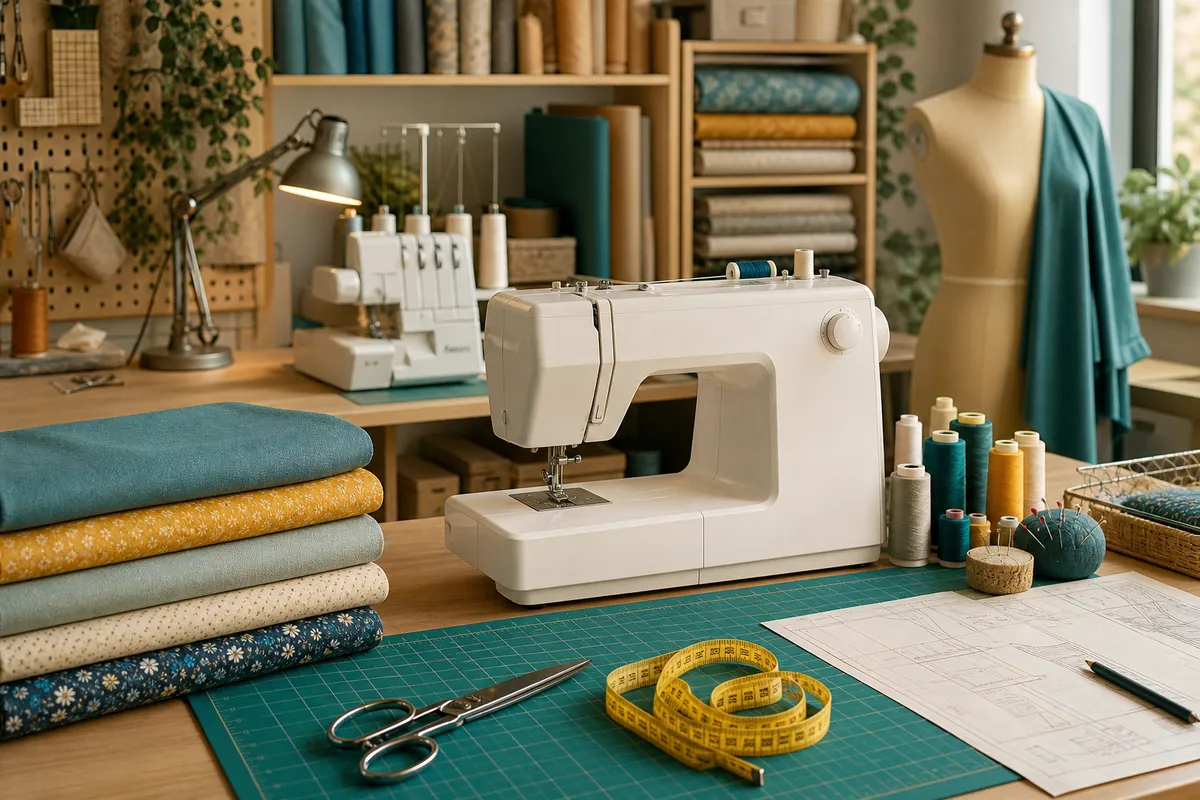
Rung one: straight lines only (first weekend)
- Machine dust covers — a rectangle with box corners protects the laser, printer, or sewing machine itself from shop dust. One seam type, immediate payoff, custom-fits equipment no store cover matches.
- Bench mat / tool mat — two layers of canvas quilted in a grid; catches small parts, protects finishes, rolls up. The electronics bench wants one immediately.
- Drawstring parts bags — hardware-store organization in ten-minute increments. Practice piece for every future casing and hem.
- Weighted laser hold-down snakes — canvas tubes filled with sand or steel shot; flatten warped stock without magnets. A sewing project in service of the laser.
Rung two: corners, straps, and hardware (first month)
- Tool roll — the classic: canvas or waxed canvas, pockets sized to your actual bits and drivers, webbing tie. Teaches measuring-to-contents, the core skill of functional sewing.
- Shop apron — duck canvas, riveted stress points (the leather-hardware kit crosses over), pockets planned around your pencil/knife/phone reality. Wear your first one until version two designs itself.
- Cord and cable wraps — hook-and-loop tape plus webbing scraps; the 3D-printer answer to cable chaos is worse than the sewn one.
- Market/tote bags — the craft-fair table staple, and the first thing on this list people offer to buy. Heavy needle, sturdy handles-through-the-seam construction.
Rung three: where textiles meet the other machines
This is where makers outrun ordinary sewing hobbyists. Laser-cut fabric: a diode or CO2 laser cuts felt, canvas, and cork fabric with sealed edges and pattern-perfect repeatability — cut twenty bag panels identical, sew an assembly line. (Natural fibers and felt only — no vinyl, no mystery synthetics.) Engraved leather labels: veg-tan patches riveted to sewn goods move them from 'homemade' to 'branded.' Printed notions: seam guides, magnetic pin trays, bobbin holders, and custom presser-foot jigs are classic functional prints.
The compound products are the sellable ones: waxed-canvas tool rolls with engraved leather closures, laser-cut felt coasters in sewn carriers, aprons with personalized patches. Nobody at the fair has your machine combination.
The textile starter bench
Duck canvas, 10 oz (5+ yards, natural)
The plywood of fabric: cheap, tough, forgiving, and right for every project above. Buy neutral by the bolt-end; dye or wax later.
See options on Amazon →Rotary cutter, self-healing mat, and quilting ruler
The accuracy trio — fabric's answer to the table saw and fence. Straight cuts make straight seams make square projects; scissors freehand make neither.
See options on Amazon →Heavy-duty machine needles + polyester thread set
Canvas and webbing eat universal needles. Size 90/14–100/16 needles and decent poly thread prevent the skipped-stitch frustration that ends beginner careers.
See options on Amazon →Webbing, hook-and-loop, and hardware assortment
Straps, closures, D-rings, and sliders — the fasteners of soft goods. One assortment covers the first ten projects.
See options on Amazon →Wonder clips + seam ripper
Clips hold canvas layers pins can't pierce; the seam ripper is the fabric world's undo key — the honest bench keeps it in reach.
See options on Amazon →The skills, in the order they arrive
- Thread the machine and wind a bobbin without the manual (day one; it's the whole boss fight).
- Sew straight and backstitch seam ends — the dust cover teaches this.
- Box corners (the fold-and-sew that turns flat into 3D) — bags and covers.
- Hems and casings — drawstrings, apron edges.
- Topstitching and attaching webbing — tool rolls and straps, where 'looks bought' lives.
- Reading and modifying a pattern — after which the internet's million free patterns are your library.
Frequently asked questions
Is sewing actually useful for a maker, or just another hobby?
Ask your shop: dust covers, tool rolls, aprons, straps, cases, and every repair of every strap and cover you own. Fabric handles the flexible, washable, soft problems the rigid machines can't touch — and the skill costs a weekend to reach useful.
Can I really laser-cut fabric?
Yes — felt, canvas, cotton, cork fabric, and denim cut beautifully with sealed (slightly melted or charred, then trimmed) edges on both diode and CO2 machines at low power. Natural fibers and known synthetics like polyester felt only; skip vinyl-coated anything (PVC rule) and mystery blends. Weight the fabric flat and expect to test-cut corners.
What sewing machine do I need for canvas and webbing?
Less than the internet insists: any decent mechanical machine with a metal frame handles 10 oz canvas and doubled webbing with the right needle (100/16) and patience at thick seams. The 'heavy duty' badge helps but matters less than needle choice. True industrial machines earn their space at production volume, not hobby volume.
What should I sew first?
A dust cover for whichever machine cost you the most: one rectangle, four seams, box corners, done in an afternoon including the swearing at the bobbin. It's the project with the highest ratio of usefulness to required skill, and every mistake hides on the inside.
Do sewn goods actually sell at maker markets?
The compound ones do: plain totes compete with everyone; waxed-canvas tool rolls with engraved leather labels compete with nobody. Sewing alone is a crowded market — sewing plus your laser or printer is a moat. Price like the hybrid product it is, not like fabric.