Tool guide
Best Sewing Machines for Makers: Canvas, Cordura, and No Nonsense
Updated July 7, 2026
Makers shop for sewing machines backwards from the quilting-store advice: less interest in 400 decorative stitches, more in whether it'll push a 100/16 needle through four layers of canvas and a webbing strap without drama. That preference — torque and simplicity over features — makes the buying decision refreshingly cheap.
Some links on this page are affiliate links. If you buy through them, The Maker Guide may earn a small commission at no extra cost to you. We only point at product categories we would compare ourselves. Details.
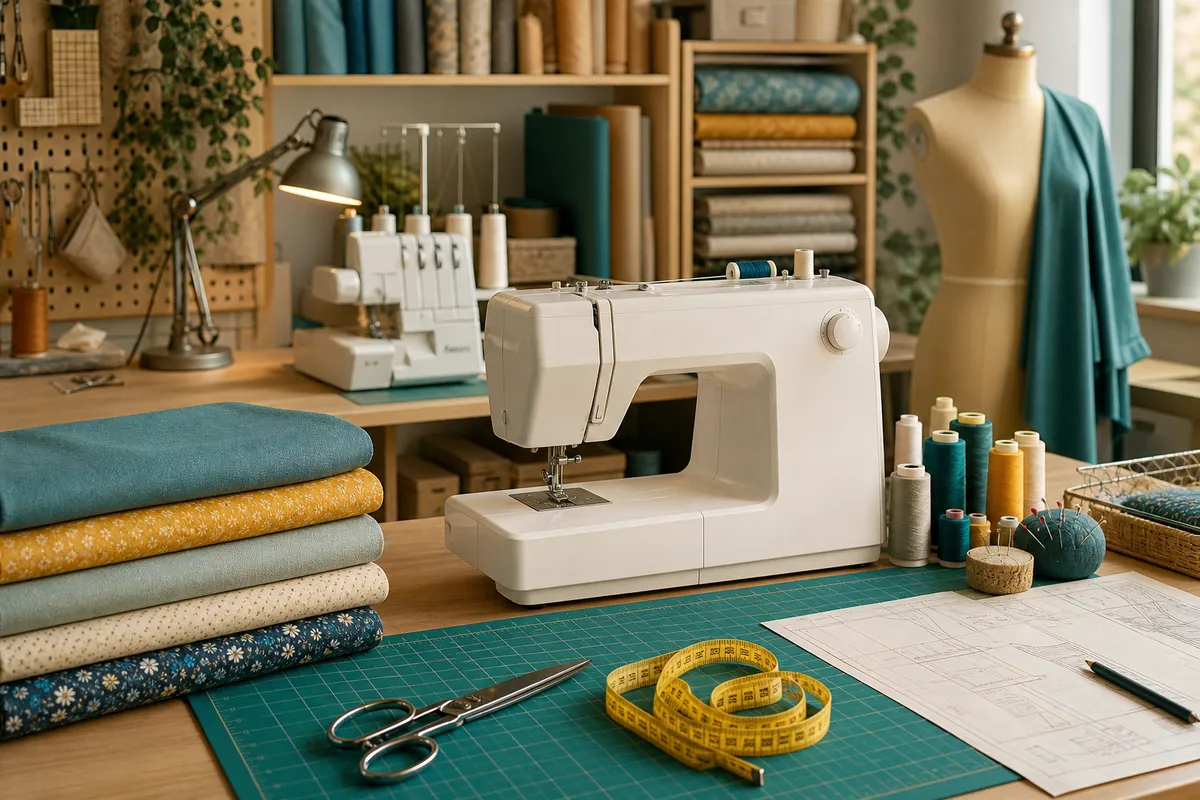
What maker sewing actually demands
The projects on our beginner sewing list — dust covers, tool rolls, aprons, totes, straps — use two stitches (straight and zigzag) and one hard requirement: punch power through thick, stiff assemblies. That comes from a metal frame (flex is lost punch), a strong motor, and the right needle far more than from any 'heavy duty' badge. The features that genuinely matter: adjustable presser-foot pressure, a metal needle plate, free arm for cuffs and tubes, and feed dogs that grip canvas rather than skating on it.
What doesn't matter for this work: hundreds of stitches, embroidery modes, and touchscreens. A $170 mechanical workhorse sews a waxed-canvas tool roll exactly as well as an $800 computerized machine — sometimes better, because there's less to object.
The picks
Singer Heavy Duty 4452/4423
The maker default for a reason: metal frame, ~1,100 stitches/minute, stronger motor than the standard line, and a street price ($160–220) that makes it an easy first machine. It handles 10 oz canvas and webbing with a 100/16 needle and shrugs at denim hems. The 'heavy duty' branding oversells it into upholstery — for soft goods and shop textiles it's honest.
See options on Amazon →Brother ST371HD / similar 'strong & tough'
Brother's answer in the same class: comparably tough, famously smooth and beginner-friendly, excellent manuals. Between this and the Singer, buy on price and local dealer support — they're closer than forum wars suggest.
See options on Amazon →Janome HD3000 / HD1000
The step-up mechanical: more metal inside, a reputation for decades of service, and the machine sewing teachers quietly own. $300–380 buys the version of this class you never replace.
See options on Amazon →A used all-metal classic (Singer 4x series, Kenmore)
The $50–150 sleeper: pre-1980 all-metal machines from estate sales sew canvas beautifully forever and are repairable with a screwdriver. Buy one that runs, budget $20 for a belt and oil, and you own the most durable option on this list.
Parts & oil on Amazon →When a true industrial makes sense (and when it doesn't)
Real industrial machines (Juki DDL class, ~$700–1,200 with servo motor and table) sew one stitch, brutally well, all day — the correct tool for a soft-goods business: bags, production runs, leather-and-canvas goods at volume. They're also 40 kg of furniture with a learning curve and no zigzag. The honest checkpoint: outgrow the domestic machine first. When your craft-fair table has a waiting list for tool rolls, the Juki pays for itself; before that, it's a very heavy aspiration.
The middle path many makers actually take: keep the domestic for versatility and add a walking-foot attachment ($15) — the poor-maker's material-feeding upgrade for thick, layered, or sticky (waxed canvas, leather) assemblies.
The setup that makes any machine 'heavy duty'
Needle assortment: 90/14–110/18, plus jeans and leather points
The single biggest capability upgrade costs $8: skipped stitches and broken thread on canvas are nearly always a too-small needle, not a too-weak machine.
See options on Amazon →Walking foot attachment
Feeds thick and layered assemblies from the top and bottom together — the difference between wrestling waxed canvas and sewing it.
See options on Amazon →Heavy polyester thread (Tex 40–70)
All-purpose thread in a strap seam is the strength lie that fails at the worst time. Heavier poly (and topstitching thread for looks) matches the fabric's ambitions.
See options on Amazon →Extra bobbins + machine oil + lint brush
The maintenance kit: wound-ahead bobbins for project momentum, oil and de-linting for the machine that suddenly 'sounds different' (they all do; it's lint).
See options on Amazon →Mechanical vs computerized, settled quickly
Computerized machines add push-button stitch selection, speed limiting, needle up/down, and better buttonholes — genuinely nice, mostly for garment and quilting work. Mechanical machines add nothing and break nothing: dials, cams, and torque, serviceable at any repair shop or kitchen table. For shop textiles and repairs, mechanical is the recommendation; for a maker household where garments and crafts share the machine, the computerized Brother CS7000X class ($230) is the versatile compromise. Either way, spend the leftover budget on the fabric and notions — the machine is the cheap part of the hobby.
Frequently asked questions
Can a home sewing machine really sew canvas and webbing?
Yes — 10 oz canvas, doubled webbing, and four-layer seam intersections are within any metal-frame domestic's ability with a 100/16+ needle, heavier thread, and patience (hand-wheel the thickest spots). What defeats home machines is sustained upholstery/leather work and 8+ layer stacks — that's industrial territory.
Is the Singer Heavy Duty actually heavy duty?
It's a strong domestic, not an industrial — 'heavy duty' relative to the plastic $99 tier, which is real: it sews maker projects a standard machine struggles with. Believe the canvas-apron reviews, not the 'sews leather!' marketing; garment leather occasionally, saddle leather never.
What about sergers and embroidery machines?
Later, if ever, for maker work: a serger finishes fabric edges beautifully (relevant if you sew clothes; decorative for tool rolls), and embroidery machines are a separate hobby with craft-fair potential — personalized patches and monograms — at $400+ entry. The straight-stitch workhorse comes first.
Why does my machine skip stitches or shred thread on thick fabric?
Nearly always consumables and setup, not the machine: needle too small or dulled (change it — needles are per-project consumables), thread too light, presser pressure wrong for the stack, or pulling the fabric instead of letting feed dogs work. Fix those before diagnosing the motor.
Old metal machine or new budget machine?
A serviced vintage all-metal machine outsews any new sub-$200 machine on thick fabric and outlives everything — the trade is no zigzag on straight-stitch models, no plastic conveniences, and finding one. If a $75 estate-sale Kenmore crosses your path and turns smoothly, take it; otherwise the Singer/Brother HD class is the low-friction answer.