CNC fundamentals
CNC Workholding for Small Projects: Clamps, Tape, and Jigs
Updated June 11, 2026
Most ruined beginner CNC projects die the same way: the stock moved. Workholding is unglamorous, costs less than any other upgrade, and improves results more than a better machine would. Here are the four methods that cover small-project work, and when each one wins.
Some links on this page are affiliate links. If you buy through them, The Maker Guide may earn a small commission at no extra cost to you. We only point at product categories we would compare ourselves. Details.
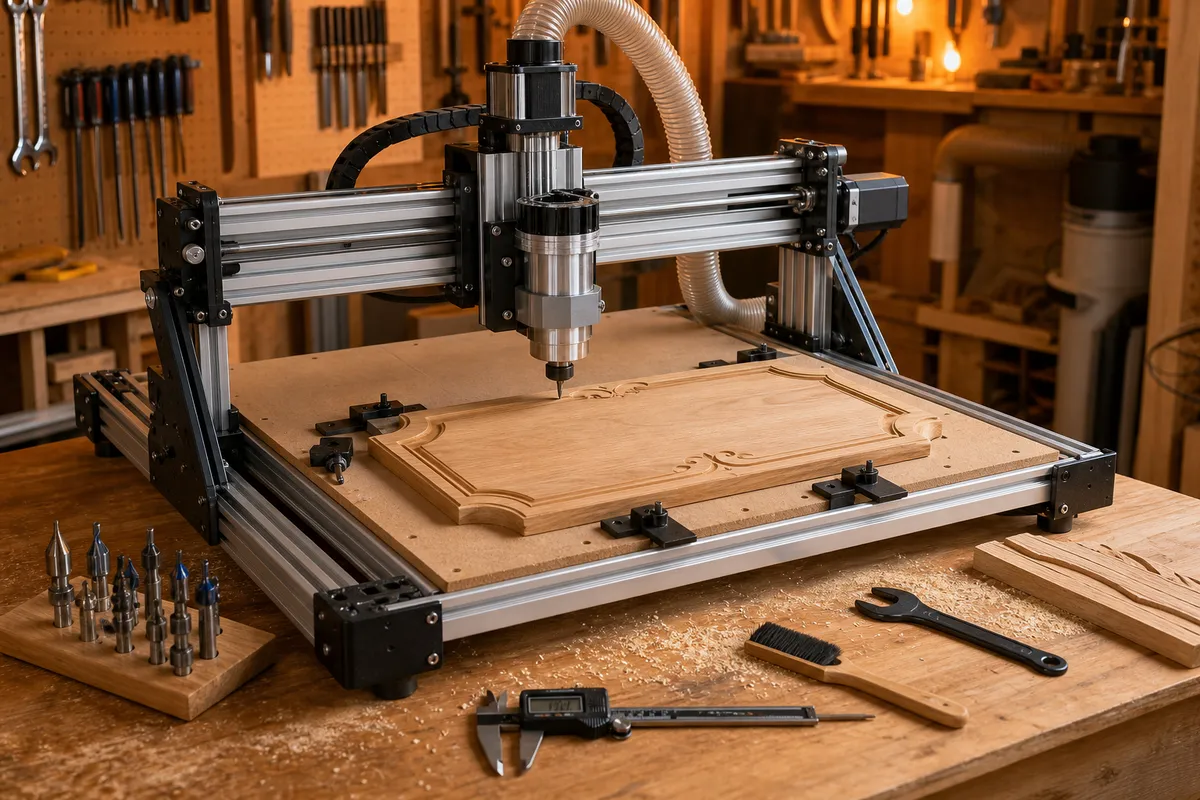
Method 1: Clamps (the default)
Toe clamps, cam clamps, and step clamps bolted to the spoilboard handle most rectangular stock. Two rules keep them from becoming the problem: keep clamp height below the bit's travel path (low-profile cams beat tall step clamps on small machines), and clamp close to the cut without being in it — draw the toolpath bounds on the stock in pencil if you're unsure.
The classic beginner crash is a rapid move across a clamp. Run an air cut (Z raised above everything) the first time you use a new clamp layout, and keep clamps out of the rapid plane or set a higher safe-Z in CAM.
Method 2: Tape and CA glue (the trick that converts people)
For through-cuts, small parts, and anything where clamps would collide: cover the spoilboard zone and the stock bottom with painter's tape, run a bead of CA glue between the tape layers, press for thirty seconds. The hold is shockingly strong, there is nothing above the stock to hit, parts don't fly when the cut finishes, and the tape peels off cleanly.
Limits: heat from aggressive cuts can soften CA, oily exotic woods bond poorly, and big heavy slabs want clamps. For coasters, signs, trays, and inlays it is the best method, full stop.
Method 3: A threaded-insert spoilboard (the upgrade)
Replace or top the stock spoilboard with MDF drilled on a grid for threaded inserts (M6 or 1/4-20 on a 50 mm grid is typical). Now any clamp goes anywhere, fences bolt down square to the machine axes, and fixtures return to the same spot every time. Surface it flat with a surfacing bit after installation and it becomes the machine's reference plane.
This is a perfect first 'machine makes the machine better' project — and a great use for 3D printed clamp parts.
Method 4: Jigs for anything you make twice
A jig is a pocket the part drops into, with toe clamps or wedges to lock it. Cut the jig on the machine itself so the pocket is perfectly located, label it, store it. For batches — twenty coasters for a craft fair, a run of products to sell — jigs turn workholding from per-part setup into a ten-second drop-in.
Number the jig and engrave the zero point on it. Six months later you will be glad.
Choosing by job
| Job | Best method | Why |
|---|---|---|
| Profile cut with no through-cuts | Clamps | Fast, strong, no consumables |
| Through-cut parts (coasters, ornaments) | Tape + CA | Nothing above stock, parts stay put after cut-through |
| V-carved sign on a board | Clamps or tape + CA | Either works; tape if the board is thin and could bow under clamps |
| Repeat parts / batches | Jig + clamps | Setup time amortizes to zero |
| Thin or warped stock | Tape + CA, more contact area | Clamps bridge warps; tape conforms |
Workholding shopping list
Low-profile cam clamp kit
Cam clamps lock with a twist, sit low, and are the everyday clamp on machines this size.
See options on Amazon →Painter's tape + medium CA glue + activator
The tape-and-glue method needs wide blue tape, medium-viscosity CA, and spray activator if you're impatient (you are).
See options on Amazon →M6 threaded inserts, 100-pack
For the spoilboard upgrade — pair with hex-head M6 bolts and you've matched commercial fixture plates at a tenth the cost.
See options on Amazon →Frequently asked questions
Why does my part shift mid-cut even with clamps?
Usually climb-milling forces on a too-light clamp grip, clamps too far from the cut, or MDF spoilboard threads stripping. Add a clamp near the heaviest cutting, switch the finishing pass to conventional milling, and check that the spoilboard itself isn't flexing.
Is double-sided tape as good as the tape-and-CA method?
Good woodworking double-stick tape works for light jobs but creeps under side load and leaves residue. Tape-and-CA is stronger, cheaper per use, and releases cleaner. Carpet tape specifically tends to be too gummy — avoid it.
Do I need a vacuum table?
Not at hobby scale. Vacuum tables shine for thin sheet production runs and need a real pump and gasketing. Tape-and-CA plus jigs covers the same ground for desktop machines at almost no cost.