Maker business
Small CNC Business Ideas for Garage Makers
Updated June 11, 2026
A garage CNC can absolutely earn money — once you accept the math: machine time, finishing time, and failure rate are real costs, and 'cheaper than Etsy' is a losing strategy. Here are the business shapes that work at desktop scale, with the numbers that make them work.
Some links on this page are affiliate links. If you buy through them, The Maker Guide may earn a small commission at no extra cost to you. We only point at product categories we would compare ourselves. Details.
The pricing floor (do this first)
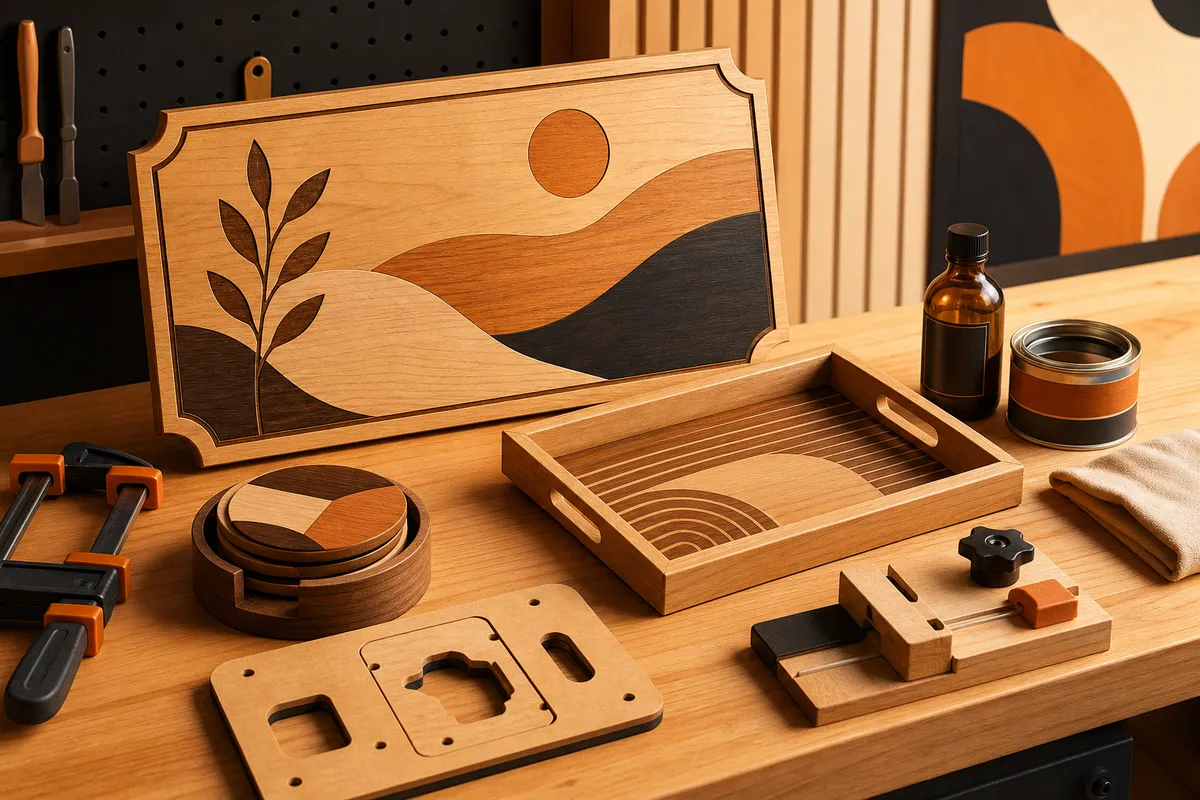
Price = (material × 2–3) + (active labor × your honest rate) + (machine time × $5–10/hr) + failure allowance (~10%). A walnut serving board with $18 of wood, 30 minutes of finishing, and an hour of machine time prices at $75–95 — and that's before market fees. If the market price for an item won't cover that, the item isn't a business, it's a subsidized hobby. Knowing this number first filters every idea below.
Business shapes that work at garage scale
| Shape | Examples | Why it works |
|---|---|---|
| Personalization premium | Name signs, established-date boards, pet memorials | Customization defeats mass-produced price comparison — the CNC project list covers what sells |
| Local trades B2B | Templates for contractors, signage for shops, jigs for other makers | Businesses pay invoices, reorder, and don't haggle like craft-fair traffic |
| Wedding/event circuit | Guest-book boards, table numbers, cake toppers, favors | Seasonal, premium-priced, deadline-driven — batch-friendly |
| Niche hobby gear | Cribbage boards, dice trays, fly-tying stations, plant stands | Enthusiasts pay for their hobby; pick a niche you speak natively |
| Digital files on the side | Sell the designs that sold as products | Zero marginal cost; the product validates the file |
What doesn't work (and why people try it)
Generic decor — competing with overseas mass production on price using a $700 machine and your weekend. Anything one Etsy search shows 10,000 of unless you have a personalization or local angle. Underpriced custom work — one 'whatever you want, $30' commission teaches a permanent lesson about scope. The pattern in every failure: selling machine output instead of selling something specific to the buyer.
Capacity: the garage ceiling
One 4040-class machine runs roughly 15–25 sellable hours a week, and finishing eats your evenings — jigs and batching stretch it, a dust-managed setup keeps it sustainable. When orders outrun that, the options in order: raise prices (always first), buy the production-class machine the revenue now justifies, or hand overflow to a fab shop — OCreate does exactly this kind of small-batch production, and keeping a relationship there means a big order is an opportunity instead of a crisis.
Validate before tooling up: a craft-fair table or a local maker community tells you in one weekend what months of listing-polishing won't. If you're in Orange County, the people at The Makr Lab have watched a hundred of these businesses start — ask them what sells.
The business-side kit
Branding iron or engraved maker's mark
A mark on every piece is the cheapest marketing that exists — buyers photograph and tag what looks intentional.
See options on Amazon →Craft fair display + Square-style reader
A weekend market is the validation lab: real strangers, real money, real feedback on pricing.
See options on Amazon →Shipping supplies for boards
The first online order shouldn't trigger a box-hunting crisis — stock the two sizes your products need.
See options on Amazon →Frequently asked questions
Can you actually make money with a desktop CNC?
Yes — typically $200–$1,500/month at hobby-hours commitment for sellers who price honestly and niche down. The machine pays for itself in months on the wedding/personalization circuit. What it won't do at desktop scale is replace a salary without becoming a full production operation.
Do I need an LLC and sales tax permit to start?
Rules vary by state; the common pattern is: a few test sales as a hobbyist is tolerated, but recurring sales mean registering for a seller's permit (sales tax) and choosing sole-proprietor vs LLC. Do the paperwork the month it becomes regular — back-taxes on a hobby that grew is the avoidable version of this story.
Etsy, fairs, or local — where to start selling?
Fairs first: same-day feedback on pricing and products with zero listing overhead. Etsy second, for the designs fairs validated, accepting its fees as marketing cost. Local B2B third — it's the least glamorous and the most profitable.