Comparison
Resin vs FDM 3D Printing: Detail vs Practicality, Honestly Scored
Updated July 7, 2026
FDM squirts melted plastic; resin cures liquid with light. The spec-sheet story — resin wins detail, FDM wins convenience — is true but undersells the gap in daily experience: one machine lives on a desk and eats spools, the other is a small chemistry hobby with gloves, wash stations, and sunlight-cured trash.
Some links on this page are affiliate links. If you buy through them, The Maker Guide may earn a small commission at no extra cost to you. We only point at product categories we would compare ourselves. Details.
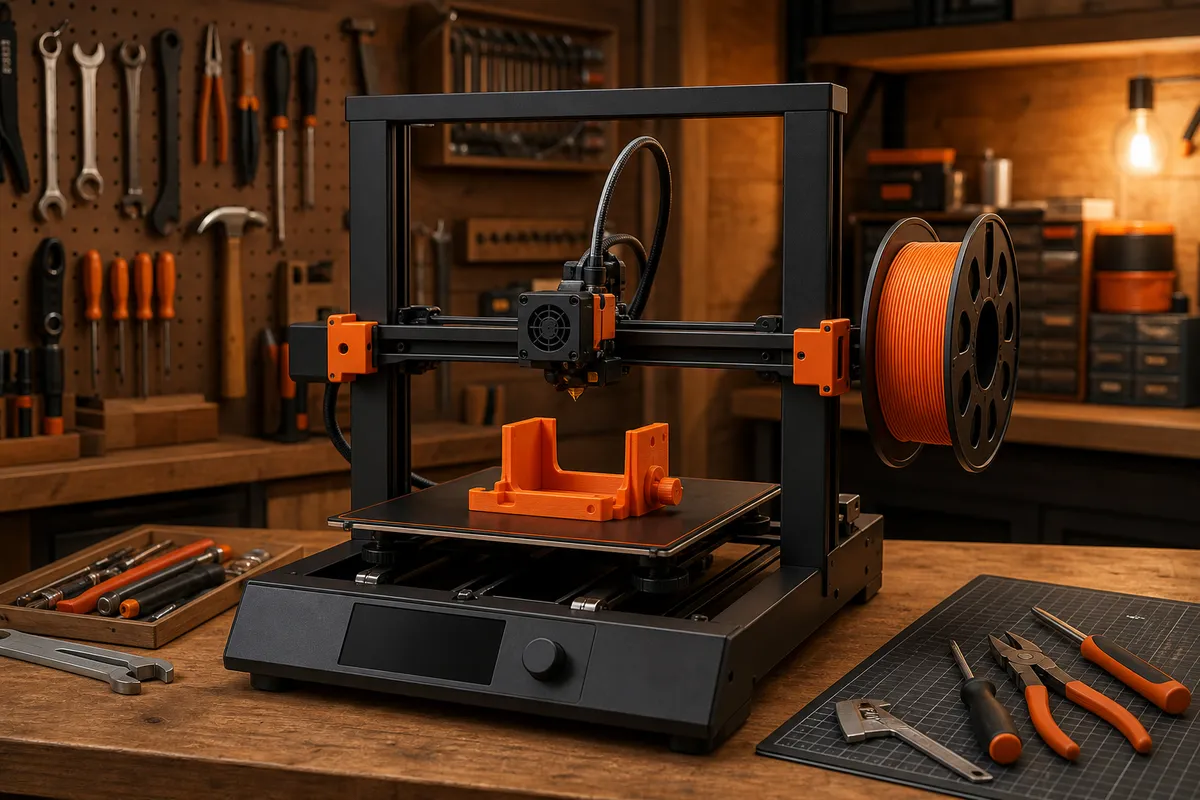
The honest scorecard
| FDM (filament) | Resin (MSLA) | |
|---|---|---|
| Detail | 0.4 mm nozzle physics; layer lines visible | Injection-molding-grade — 30–50 µm; miniatures look bought |
| Part strength | Real parts: brackets, jigs, tool mounts | Brittle by default; engineering resins help at 3× cost |
| Workflow per print | Slice, print, snap off plate | Gloves on: drain, wash (IPA), cure, filter, wipe everything |
| Mess & safety | Effectively none (PLA/PETG) | Sensitizing liquid, VOCs, ventilation required |
| Kid/family proximity | Fine in living space | Not in living space; skin contact is cumulative-sensitization risk |
| Build volume per $ | 256 mm³ at $300 | Smaller vats; big-format resin costs jump fast |
| Running cost | $15–25/kg filament | $25–50/kg resin + IPA + filters + gloves + FEP film |
| Failure mode | Spaghetti you throw away | Resin-filled vat to strain and a plate to scrape |
What resin is unambiguously for
Anything where surface finish is the product: tabletop miniatures and busts (the killer app — a $200 MSLA machine outputs Games-Workshop-quality figures), jewelry and casting masters, dental and scale-model work, and fine cosplay detail parts. At 35 µm layers, curved surfaces come out smooth — not 'smooth for a print,' actually smooth. FDM cannot buy its way to this finish; sanding and filling only approximates it with hours of labor.
If your project list reads 'minis, figures, rings, models' — the decision is made, buy resin, and budget for the accessories below because they are not optional.
What FDM is unambiguously for
Everything functional: shop organization, brackets, jigs and fixtures, enclosures with threaded inserts, replacement parts, and anything larger than a fist. Standard resin is glassy — strong in compression, snappy in bending, and it keeps curing (and embrittling) in sunlight for years. Tough/ABS-like resins narrow the gap for real money, but a $20 spool of PETG still beats them for load-bearing parts.
FDM is also simply the machine you'll use more: no gloves, no post-wash, no waste-handling ritual means marginal prints happen instead of getting postponed.
The workflow tax, itemized
Budget the true resin cost before deciding. Per session: nitrile gloves, paper towels, and 10–20 minutes of wash-and-cure handling. Per liter of resin: roughly a liter of 90%+ IPA over time, plus filter funnels. Per few months: FEP release film ($10–15) when the vat floor clouds or punctures. Plus once: a wash/cure station ($60–140) — the two-bucket manual method works but is exactly the friction that parks resin printers in closets. And ventilation: resin VOCs are real; a window vent or enclosure-with-duct is part of the machine, same as laser fume handling.
None of this is a dealbreaker for people who want what resin makes. It is a dealbreaker for people who wanted a printer, saw 'more detail,' and bought the wrong machine.
If resin wins: the non-optional kit
Entry MSLA resin printer (12K-class)
Detail ceilings moved past what hobby eyes can resolve — buy on build volume, screen warranty, and brand support rather than K-number bragging rights.
See options on Amazon →Wash & cure station
The accessory that decides whether the printer gets used in month three. Two-in-one units (wash basket + UV turntable) cover hobby scale.
See options on Amazon →Nitrile gloves (box of 100) + resin filters
Gloves are per-session consumables — uncured resin is a skin sensitizer and the reaction, once developed, is permanent. Funnel filters keep failed-print debris out of the bottle.
See options on Amazon →99% isopropyl alcohol, gallon
The wash solvent. Buy by the gallon, reuse in a two-stage dirty/clean system, and sun-cure the saturated dregs before disposal.
See options on Amazon →Water-washable resin (to start)
Trades some detail and strength for washing with tap water instead of IPA — a genuinely gentler on-ramp for a first liter. Cured-waste handling rules still apply.
See options on Amazon →The both-machines answer
Like CNC vs 3D printer, mature shops often end with both: FDM for the ninety functional prints a year, resin for the ten that have to be beautiful. If that's the trajectory, buy FDM first — it serves more of a beginner's list — and try resin at a makerspace before committing to the chemistry: The Makr Lab runs both types, gloves provided, which is the cheapest way to discover whether the resin workflow charms or annoys you.
Frequently asked questions
Is resin printing worth it for miniatures if I already have FDM?
If minis are a real part of your hobby, emphatically — the finish difference isn't incremental, it's categorical. A $200–300 MSLA machine plus $150 of accessories produces figures FDM can't approach at any settings. If minis are occasional, buying prints from a resin-owning friend is the better economy.
Are resin fumes dangerous?
Standard resins emit VOCs that irritate and sensitize with repeated exposure — treat ventilation as required equipment, not caution theater. Low-odor resins reduce smell, not risk. The bigger long-term hazard is skin contact: uncured resin is a cumulative sensitizer, and gloves-always is the rule that keeps the hobby open to you.
Can resin prints go outside or hold mechanical loads?
Standard resin embrittles in UV and creeps under sustained load — wrong tool. Tough resins (ABS-like) handle clips and enclosures; engineering resins go further at $60–100/kg. For brackets and outdoor parts, FDM PETG or ASA remains the honest answer.
Which is cheaper to run long-term?
FDM, clearly: $20/kg filament with near-zero consumables versus $30+/kg resin plus IPA, gloves, filters, and FEP film — realistic resin cost lands 2–3× FDM per printed gram. Resin buyers are paying for finish, and when finish is the product, it's worth every cent.
Do fast FDM printers close the detail gap?
No — speed and detail are different axes. A 0.2 mm nozzle on a slow, perfectly tuned FDM machine still shows layer structure that 35 µm MSLA doesn't. What modern FDM printers closed is the convenience gap versus older FDM; resin's detail lead is physics and stays.